
Browse Items (1085 total)
Sort by:
Work
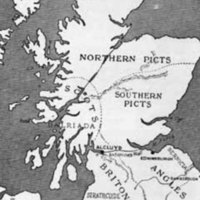
The Picts would have travelled by land and sea.
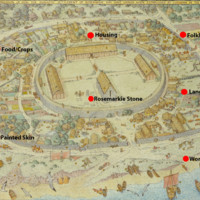
As well as being skilled stone masons the Pictish people would have had to work together building housing, growing crops, tending livestock, hunting, weaving, making tools and clothing, carving boats…
As well as being skilled stone masons the Pictish people would have had to work together building housing, growing crops, tending livestock, hunting, weaving, making tools and clothing, carving boats…
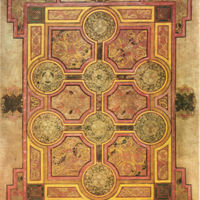
Cross on the front of Rosemarkie Cross Slab
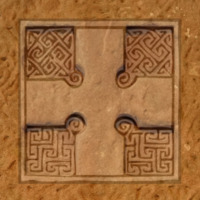
If you look closely at the cross on the front of the Rosemarkie Cross Slab, you can see within the recessed areas, key pattern design and four spirals.
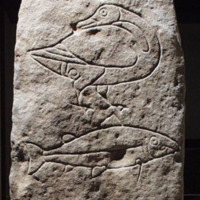
Motif with Triple Disc
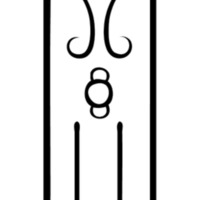
The triple disc is a Pictish symbol of unknown meaning, that is found on Class I and Class II Pictish stones.
The symbol is found in various combinations with other symbols, notably with the crescent and v-rod. The symbol is constructed from a…
The symbol is found in various combinations with other symbols, notably with the crescent and v-rod. The symbol is constructed from a…
Serpent & Z-rod
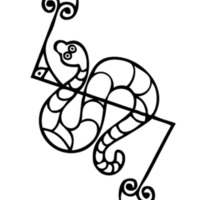
The serpent or snake, is thought to be a symbol of medicine/healing, although this is unknown.
The Z-rod, like the V-rod, may represent a broken arrow or spear, but again this is a Pictish symbol of unknown meaning.
The Z-rod, like the V-rod, may represent a broken arrow or spear, but again this is a Pictish symbol of unknown meaning.

Motif and Z-rod
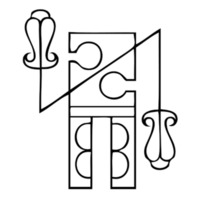
This symbol is known as the rectangular Motif and Z-Rod, again, this Pictish symbol is of unknown meaning.
Also sometimes a square shaped motif with Z-rod symbol is represented.
It is thought that the rectangle in the centre of the lower…
Also sometimes a square shaped motif with Z-rod symbol is represented.
It is thought that the rectangle in the centre of the lower…
Double Disc Z-Rod
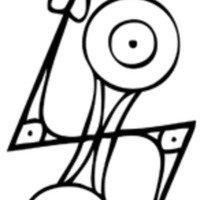
The double disc is a Pictish symbol of unknown meaning, that is frequently found on Class I and Class II Pictish stones, as well as on Pictish metalwork. The symbol can be found with and without an overlaid Z-rod (also of unknown meaning), and in…
Mirror and Comb
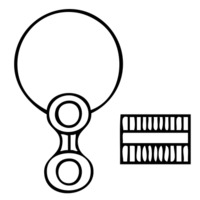
Another object commonly inscribed on Pictish stones is the mirror, often paired with a comb.
The comb and mirror are thought to be symbols of female wealth and prestige, and may denote a woman’s memorial, although they are also heavily associated…
The comb and mirror are thought to be symbols of female wealth and prestige, and may denote a woman’s memorial, although they are also heavily associated…
Crescent V-rod with interlace
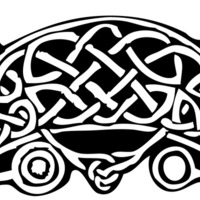
Underneath the Crescent with interlace, the symbols may be the back and front of a mirror, alternatively the larger one may be a mirror case.
double disc and z-rod
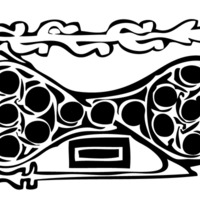
Beneath the double disc and Z-rod is a double sided comb.
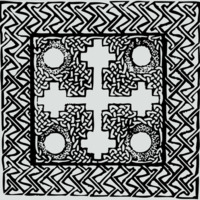
The cross on the back of the Rosermarkie Cross Slab
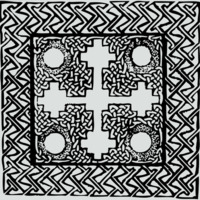
Featuring interlace and four bosses. Surrounded by a key pattern border.