Browse Items (1085 total)
Sort by:
Rosemarkie Cross Slab
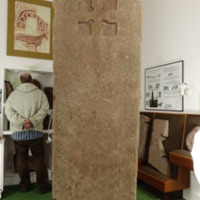
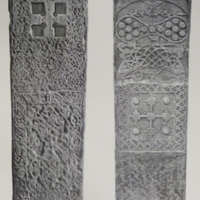
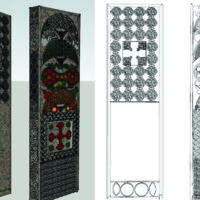
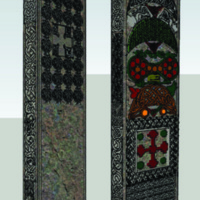
The original location of the Rosemarkie Cross Slab was most likely within a Pictish settlement or monastery, it later was used as a floor slab in Rosemarkie Church and also stood in the Churchyard, before being moved and preserved within Groam House…
Housing
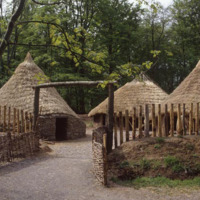
Pictish buildings would appear to have varied depending on regional location and building material available.
Evidence of Pictish housing finds them to be of a reasonable size, round or oval shaped with no windows and a central hearth. Access to…
Evidence of Pictish housing finds them to be of a reasonable size, round or oval shaped with no windows and a central hearth. Access to…
Folklore

David MacRitchie, a Scottish folklorist (1851-1925), argued that fairies were based on a real diminutive or pygmy-statured population that lived in Scotland during the late Stone Age:
"Postulations based on the premise that fairies constitute a…
"Postulations based on the premise that fairies constitute a…
Painted Skin
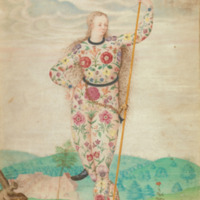
It is said that the Picts got their name from the Romans, who called them Picti, which is Latin for ‘painted people’. This is thought to refer to the tales of the Picts painting and tattooing their bodies.
Latin Transcriptions

All documents are listed in the University's catalogue, at http://www.st-andrews.ac.uk/library/specialcollections/collections/archives/
Early Records of the University of St Andrews
Taken from J. M. Anderson (ed.) Early records of the University of St. Andrews (Edinburgh, Scottish History Society,…
Primary sources held within Special Collections at St Andrews University Library
All catalogue entries can be found on the University of St Andrews Library Special Collections website: http://www.st-andrews.ac.uk/library/specialcollections/collections/archives/
Further Reading on the Church in Medieval St Andrews
This resource is available as a word document at the bottom of this page.
Further Reading on the Town of Medieval St Andrews
This resource is available as a word document at the bottom of this page.
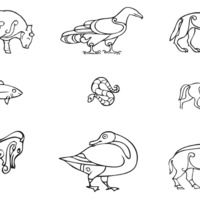
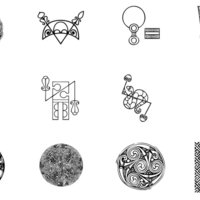
Crescent V-rod
The face of this Crescent is covered with key pattern design.